
Steel and metalworking occupational safety guide
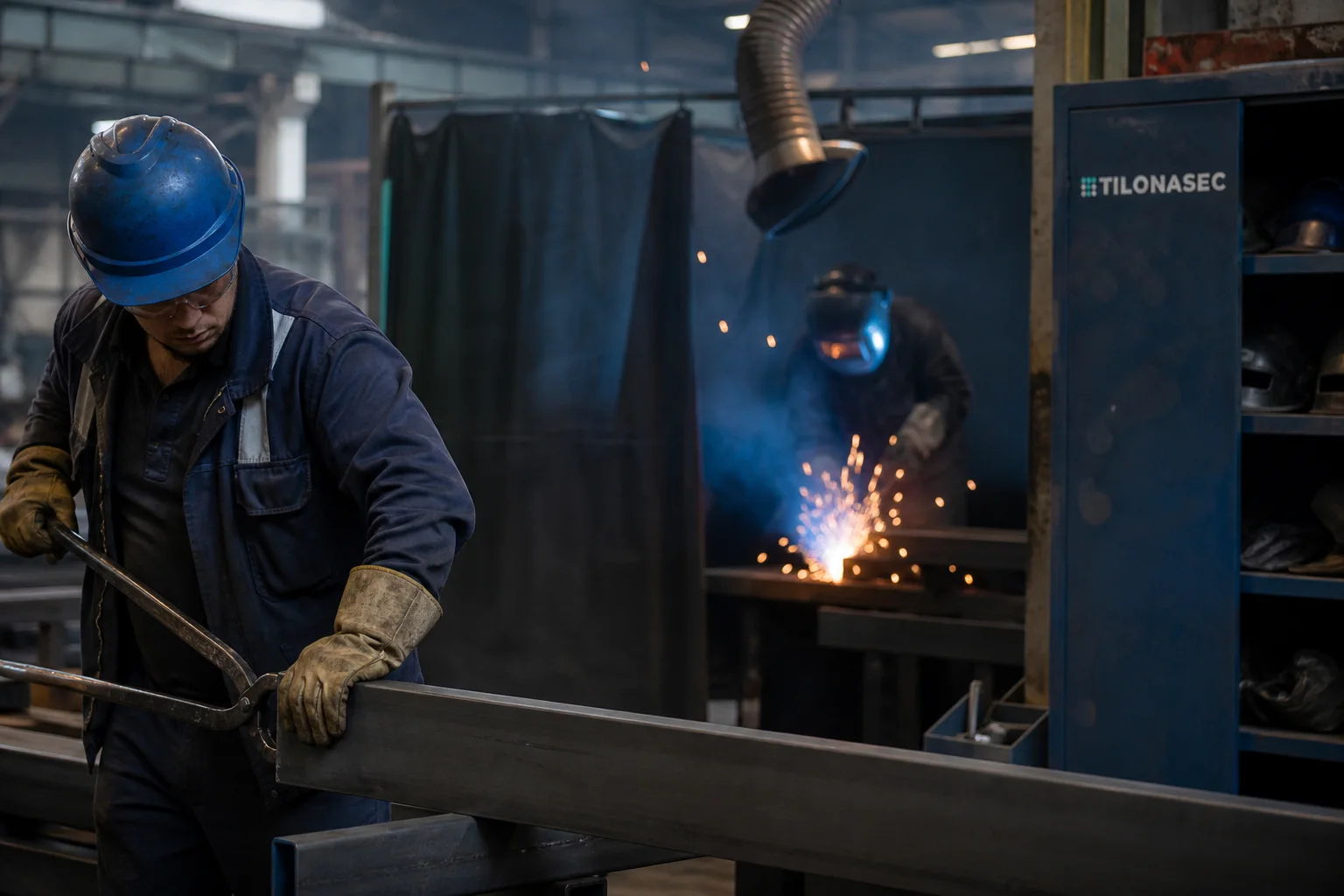
In metalworking, cut, heat, spark, noise and handling risks can occur within a single operation.
In short
In metalworking, cutting, heat, sparks, noise and material handling can meet within a single operation. Protection must therefore resist mechanical and thermal loads at once: a welding glove is not cut-resistant, and a cut-resistant glove melts in sparks. The task decides, not the job title.
Where a good specification begins
What should be clarified first?
A hand-protection performance level alone is not enough: grip, sheet edges, oily surfaces and thermal exposure must also be assessed. Welding requires an integrated eye, face, hand and clothing system, while particle and noise exposure determine equipment for grinding.
Typical risk areas
- Sharp sheet edges and burrs
- Hot metal and sparks
- Flying particles and dust
- Prolonged noise exposure
Show us the work for a more precise quotation
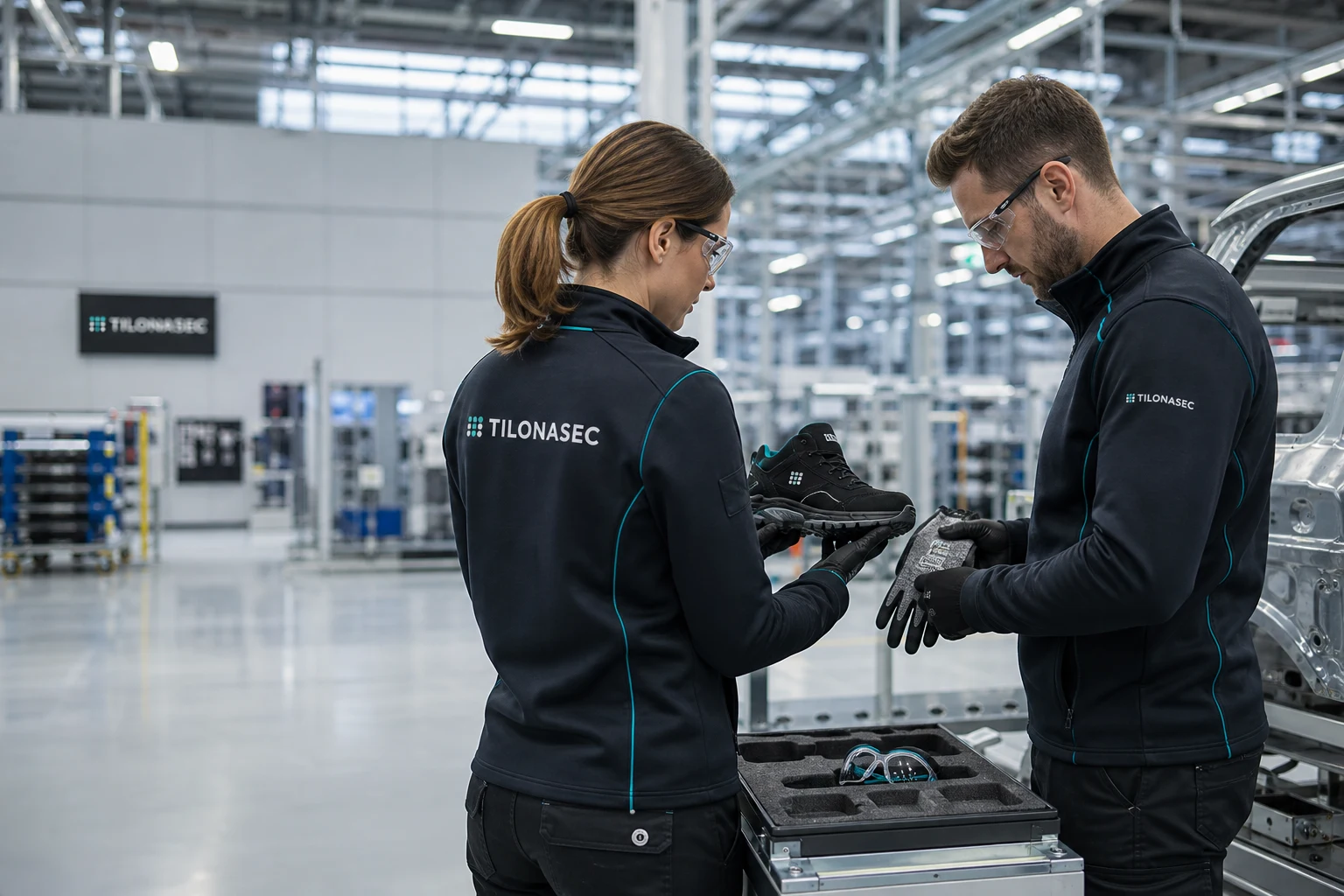
A site photo or short video often explains more than a generic product list. It reveals the floor, working height, machinery and equipment worn together.
- Where does the work happen?
- Indoors, outdoors, in a wet zone, around vehicle traffic or at height.
- How long is it worn?
- For a full shift, a short intervention or only one defined work phase.
- What is worn with it?
- Helmet, eyewear, earmuffs, respirator and harness must remain comfortable and compatible together.
Which starting kit suits each role?
These are procurement starting points, not automatic PPE requirements.
| Role | Procurement starting point |
|---|---|
| Sheet-metal handler | Gloves selected for cut risk and grip, plus arm and foot protection. |
| Welder | Eye, face, hand and body protection selected for the welding process. |
| Grinding and cutting operator | Eye and face protection, hearing protection and particle-appropriate RPE. |
| Material handler | Mechanical hand and foot protection, with high-visibility clothing where required. |
Expert product selection
Recommended products for your first shortlist
Start with relevant, easy-to-compare products selected for this working environment. Prices, availability and technical data are kept up to date.
Building blocks for the complete solution
Which markings are useful starting filters?
A standard marking can narrow the live product range quickly, but it does not by itself prove that a product is suitable for a particular role.
- EN 388
- Performance tests for protective gloves against mechanical risks. Interpret each level against the actual abrasion, cut, tear and puncture hazards.
- Filter products by this marking
- EN 407
- Performance tests for gloves protecting against thermal risks and flame. Select contact, convective or radiant-heat levels for the actual task.
- Filter products by this marking
- EN ISO 11611
- Requirements for protective clothing used in welding and allied processes. Select class and application from the welding process, spatter and surrounding hazards.
- Filter products by this marking
- EN 352-1
- Safety and performance requirements for earmuffs. Match attenuation to measured noise, frequency distribution, wearing time and other head-mounted PPE.
- Filter products by this marking
Always compare the results with the documented risk assessment, the required performance level and the product’s current EU declaration of conformity.
Plan in three layers
- 1. Core role kit
- Clothing, footwear and basic PPE used on every shift, with size runs and defined replacement triggers.
- 2. Task module
- Additional protection and checks issued for less frequent but higher-risk operations.
- 3. Reordering plan
- Minimum stock, size distribution, seasonality, inspections and documented approval points.
The detailed knowledge behind the decision
Hand protection
Protective glove selection guide
Protective glove standards and markings explained: mechanical and chemical risks, cut resistance, materials, coatings, grip and sizing.
Read more →Respiratory protection
Choosing respiratory protection: FFP mask or reusable respirator?
How to select respiratory protection for particles, gases and vapours: FFP1–FFP3, A, B, E, K and P filters, combined cartridges, powered systems and face-seal checks.
Read more →Procurement
PPE tender documents: a specification template using EN standards
Write a PPE specification that produces comparable bids: five layers of requirements, a role-based template and practical evaluation criteria.
Read more →Procurement checklist
Before requesting a quote
Better input produces more comparable quotations, a more accurate size run and fewer later changes.
- 01 Record cut and heat exposure for each task
- 02 Trial gloves with the actual workpiece
- 03 Check eye and face protection compatibility with respiratory and hearing protection
- 04 Document replacement cycles and rejection criteria
Frequently asked questions
The questions that come up most often during procurement - the ones the rest of this article does not cover.
Why is a welding glove unsuitable for cutting?
Because it was designed for something else. Welding gloves are leather, tolerating heat and sparks, but offer no cut protection. Cut-resistant gloves use synthetic yarns that melt on contact with sparks. The same worker may need both - in different phases of the job.
When is hearing protection mandatory?
Noise measurement tells you. Above the statutory action value the employer must provide hearing protectors; above the upper limit, wearing them is compulsory. Decibel levels cannot be estimated by ear - without measurement the basis for choosing is missing.
Are safety glasses enough for grinding?
Glasses without side protection are not: grinding sparks also arrive from the side. Glasses with closed side shields or a face shield are the right choice, and the lens impact marking (F/B/A) shows what impact energy they were rated for.
Professional and legal framework
This page supports decision-making. Specific obligations must always be established from current legislation, the local risk assessment and the documentation for the selected product.
-
Hungarian Act XCIII of 1993 on Occupational Safety
The Hungarian legal framework for risk assessment, prevention and employer responsibility.
-
Regulation (EU) 2016/425 on personal protective equipment
Essential requirements and conformity assessment for PPE placed on the EU market.
-
Hungarian Decree 65/1999 (XII. 22.) EüM on the use of PPE at work
Direct Hungarian requirements for workplace selection, compatibility, use, training and inspection.
-
EU-OSHA OiRA risk-assessment tools
A step-by-step risk-assessment framework, particularly useful for micro and small enterprises.
-
Hungarian Decree 3/2002 (II. 8.) SZCSM-EüM on minimum workplace safety requirements
The comprehensive Hungarian framework for the design, operation and risk control of fixed workplaces.
Important professional note
The product groups and combinations shown are starting points. They do not replace the employer’s documented risk assessment, PPE issue rules, the manufacturer’s instructions or the decision of a competent occupational safety professional. Always verify markings, compatibility and protective performance in the current documentation for the selected product.
Request a quotation assembled by role
Tell us the headcount, roles, current problem and required deadline. We will help plan trial items, size runs, decoration and replenishment.