
Choosing respiratory protection: FFP mask or reusable respirator?
How to select respiratory protection for particles, gases and vapours: FFP1–FFP3, A, B, E, K and P filters, combined cartridges, powered systems and face-seal checks.
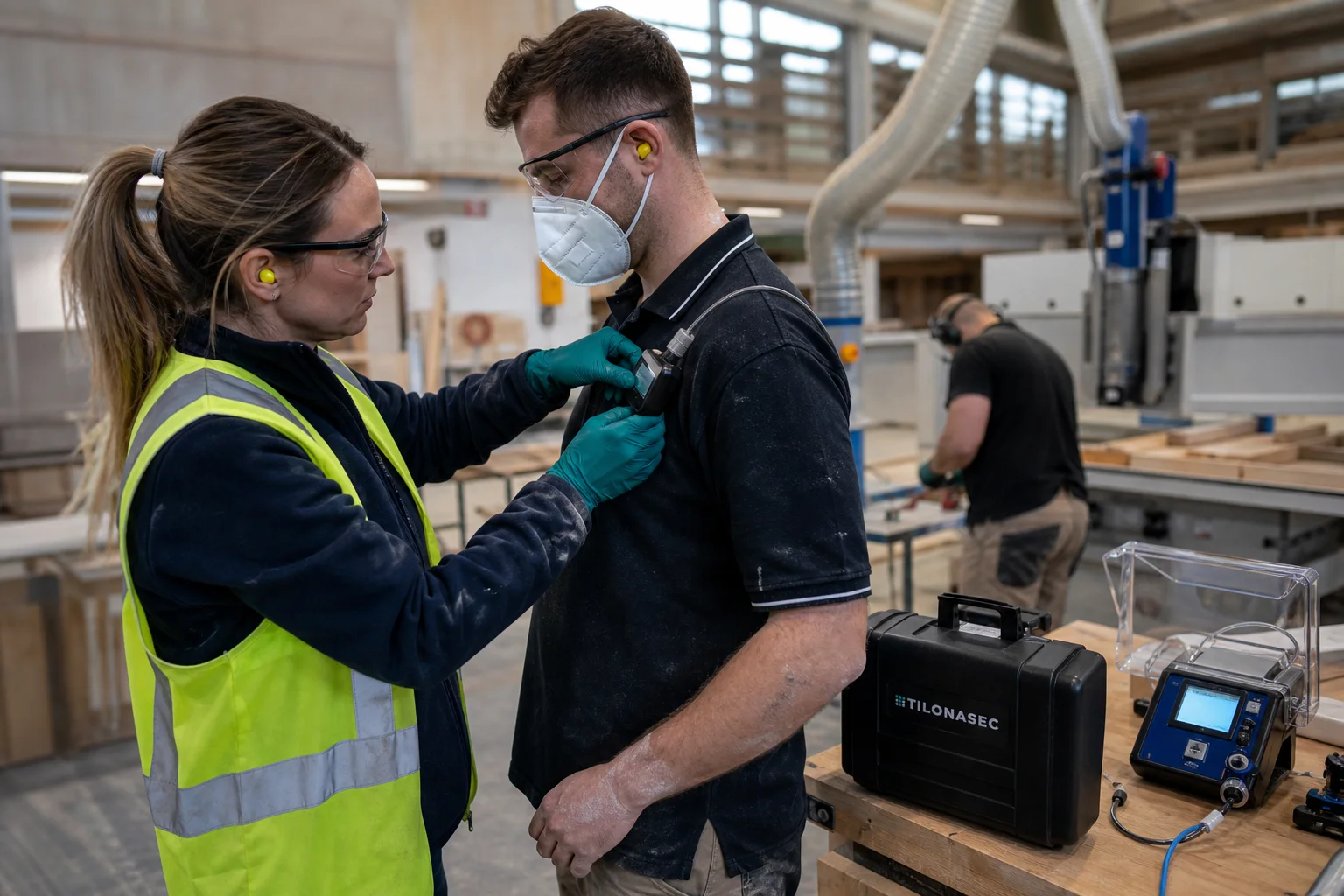
Respiratory protection must be selected for the contaminant in the air, not by choosing a mask first. Dust, mist, gas and vapour call for different filters. Even the most expensive full-face respirator is ineffective with the wrong cartridge — or without a reliable face seal. This guide explains the selection process and the markings shown on the product and its packaging.
The essentials in thirty seconds
- Identify the type of contaminant first: particles, gas or vapour, or a combination. The risk assessment and safety data sheet establish this, not the catalogue.
- Filtering facepiece (EN 149, FFP1–FFP3): for particles only, generally for occasional or shorter tasks.
- Reusable respirator (EN 140 half mask or EN 136 full-face mask) with a replaceable filter: for gases, vapours and regular or prolonged work.
- The filter letter identifies the contaminant group; the number identifies capacity, from 1 to 3. The colour code carries the same information.
- No seal means no protection: facial hair, spectacle arms or the wrong size can allow contaminated air to bypass the filter.
😷 Two systems for two types of use
In practice, the first decision is whether the task calls for a disposable filtering facepiece or a reusable respirator.
| Filtering facepiece (EN 149) | Half or full-face respirator (EN 140 / EN 136) | |
|---|---|---|
| Protects against | Particles only: dust, smoke and aerosols | Particles, gases or vapours, depending on the filter |
| Marking | FFP1, FFP2 or FFP3 | A, B, E, K or P plus class, shown on the filter |
| Service life | Disposable; commonly one shift | The facepiece is reusable; filters are replaced |
| Typical use | Occasional, short-duration dusty work | Regular, longer-duration or chemical exposure |
Comfort does not determine this choice. A disposable filtering facepiece does not protect against gas or vapour, even if it appears to reduce an odour. Reduced smell is not evidence of protection.
🔤 Filter letters and colour codes
Replaceable filters are marked in accordance with EN 14387. The letter identifies the chemical group for which the filter has been tested:
| Code | Colour | Tested for |
|---|---|---|
| A | brown | Organic gases and vapours with a boiling point above 65 °C, including many solvents and thinners |
| AX | brown | Low-boiling organic compounds below 65 °C |
| B | grey | Inorganic gases and vapours, excluding carbon monoxide |
| E | yellow | Sulphur dioxide and other acidic gases |
| K | green | Ammonia and organic ammonia derivatives |
| Hg | red | Mercury vapour |
| P | white | Particles — dust, smoke and aerosols — under EN 143 |
The number following the letter denotes capacity: 1 is low, 2 medium and 3 high capacity. It does not describe a stronger type of protection; it describes how much contaminant the filter can retain before it is exhausted.
Combined filters
Where gas and particles occur together — solvent vapour and paint mist during spray painting, for example — a combined filter is required. Its marking combines the gas-filter letter and particle-filter P code, such as A2P3.
🎭 What do FFP1, FFP2 and FFP3 mean?
EN 149 places filtering facepieces in three classes according to total inward leakage during testing: leakage through the filter material and around the edge are considered together. A higher number indicates a stricter performance requirement, but the class does not by itself establish whether the mask is sufficient for a workplace. That decision depends on measured concentration, the occupational exposure limit and the assigned protection required by the risk assessment.
Three additional markings often cause questions:
- NR — non-reusable; intended for use within a single shift.
- R — reusable for more than one shift, subject to the manufacturer’s cleaning instructions.
- D — passed the dolomite dust clogging test, helping keep breathing resistance lower during extended wear.
💨 Powered and supplied-air systems
For long wearing periods, hot environments or work where breathing resistance becomes burdensome, a powered air-purifying respirator under EN 12941 may be appropriate. A fan draws air through the filter and supplies it to a helmet or hood. Loose-fitting hood and helmet systems can also provide an option for people with facial hair, where a tight-fitting facepiece cannot seal.
There is an important limit: all filtering systems, including powered ones, clean air from the surrounding atmosphere. They must not be used in oxygen-deficient environments or atmospheres of unknown composition. Such conditions require a suitable supplied-air or self-contained breathing system selected by a competent specialist.
✅ The face seal is the most common point of failure
Even a correctly selected filter can be bypassed when air enters beneath the seal. Check the following:
- Beards and stubble: even short stubble across the sealing surface can create a leak. A suitable loose-fitting powered hood or helmet may be needed.
- Spectacles: ordinary spectacle arms can cross the seal of a full-face mask; a compatible internal prescription frame is the correct solution.
- Size: half and full-face masks are available in different sizes. One size will not fit every wearer.
- Pre-use seal check: follow the manufacturer’s positive or negative pressure check every time the facepiece is fitted. This is not a substitute for the formal fit-testing method required by the employer’s programme.
🔄 When should a filter be replaced?
For a particle filter, increasing breathing resistance is a clear replacement sign. Gas and vapour filters are different: do not wait until the contaminant can be smelt, as breakthrough may already have occurred and odour thresholds vary. Use a documented change schedule based on the manufacturer’s instructions and the exposure conditions. Store opened cartridges sealed and in accordance with their instructions.
Frequently asked questions
Is FFP2 enough for painting?
Not for solvent-based paint vapour. FFP2 is a particle filter, whereas solvent vapour is gaseous. A suitable facepiece and combined filter — often an A2P3-type specification, subject to the safety data sheet and assessment — may be required. Water-based spraying can still create a particulate mist; selection must always start with the product information and exposure assessment.
How long can an FFP mask be worn?
An NR-marked product is designed for one shift and must be replaced sooner if it becomes wet, contaminated, damaged or difficult to breathe through. An R-marked product may be reusable, but only under the manufacturer’s cleaning and use instructions.
Does a dust mask protect against welding fume?
Welding fume contains particles, so particle filtration is relevant, but welding can also generate gases and presents distinct heat and eye hazards. A powered system integrated with suitable welding protection is often the practical approach. Face and eye protection is certified separately; see our head-protection guide.
Final thought
The order of selection is fixed: identify the contaminant, select the filter, then select and fit the facepiece. A reliable seal governs all three. If any part is missing, wearing a respirator does not in itself provide protection.
For the next step, send us the task and the relevant safety data sheets in a quote request. We can recommend an appropriate filter and facepiece combination, or you can browse our respiratory-protection range.
Technical reference points: EN 149 (filtering facepieces), EN 143 (particle filters), EN 14387 (gas and combined filters), EN 140 and EN 136 (half and full-face masks), and EN 12941 (powered filtering systems). Standards define test scope and methods; the workplace risk assessment, measured concentration and applicable exposure limits determine the required protection.