
Mining and earthworks occupational safety guide
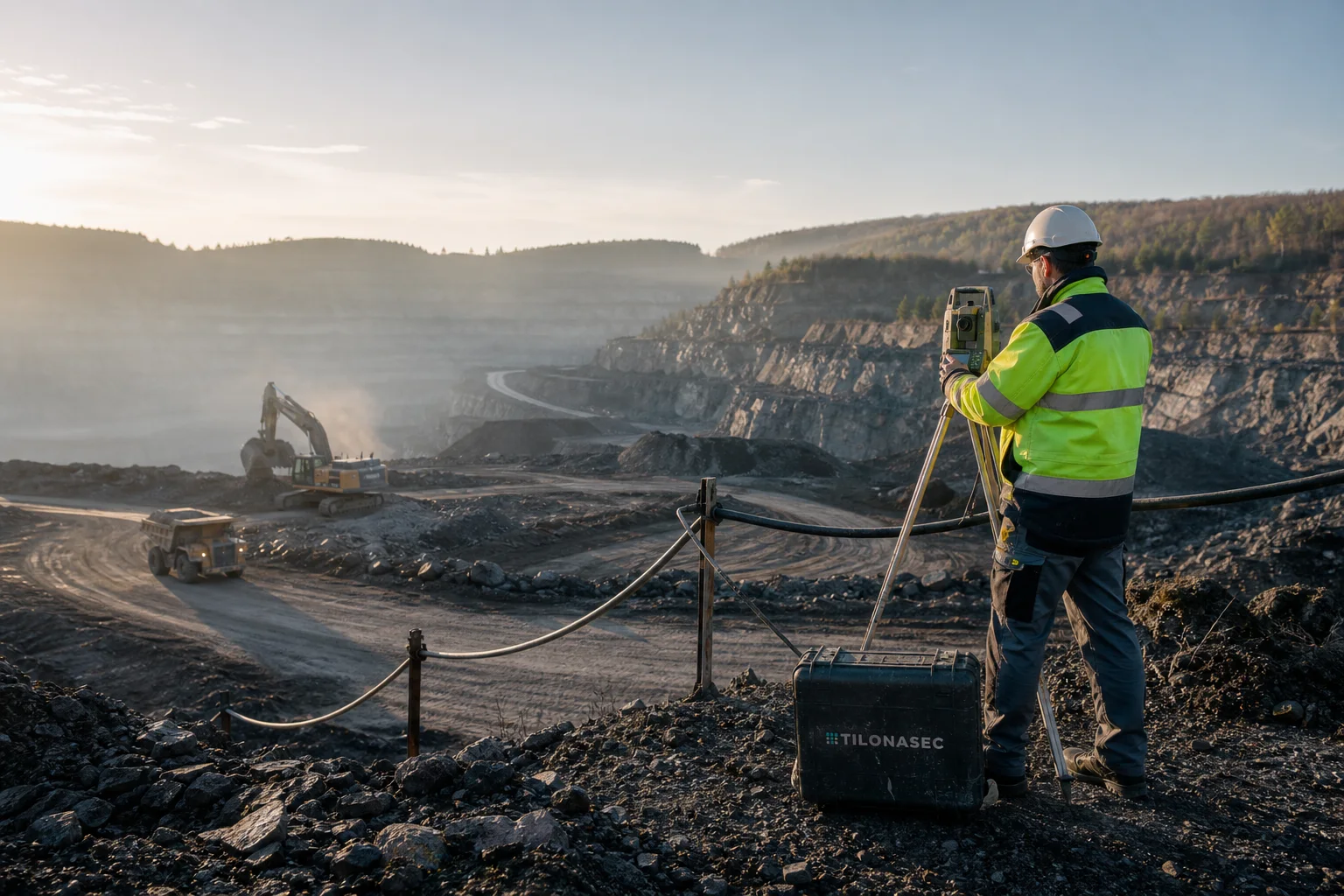
For heavy field work, dust, noise, plant traffic, weather and ground conditions jointly determine the equipment.
In short
In heavy field work, dust, noise, machine traffic, weather and ground conditions together determine the equipment. Near heavy machinery, visibility and head protection are baseline requirements, while dust and vibration are slow, cumulative loads - protection against these can only be planned from regular measurement.
Where a good specification begins
What should be clarified first?
Fixed and mobile worksites can change rapidly. Visibility rules, helmet and hearing-protector compatibility, footwear grip on terrain and dust controls must therefore be managed as one integrated system.
Typical risk areas
- Heavy plant and pedestrian traffic
- Dust and flying particles
- Noise and vibration
- Uneven, wet or loose ground
Show us the work for a more precise quotation
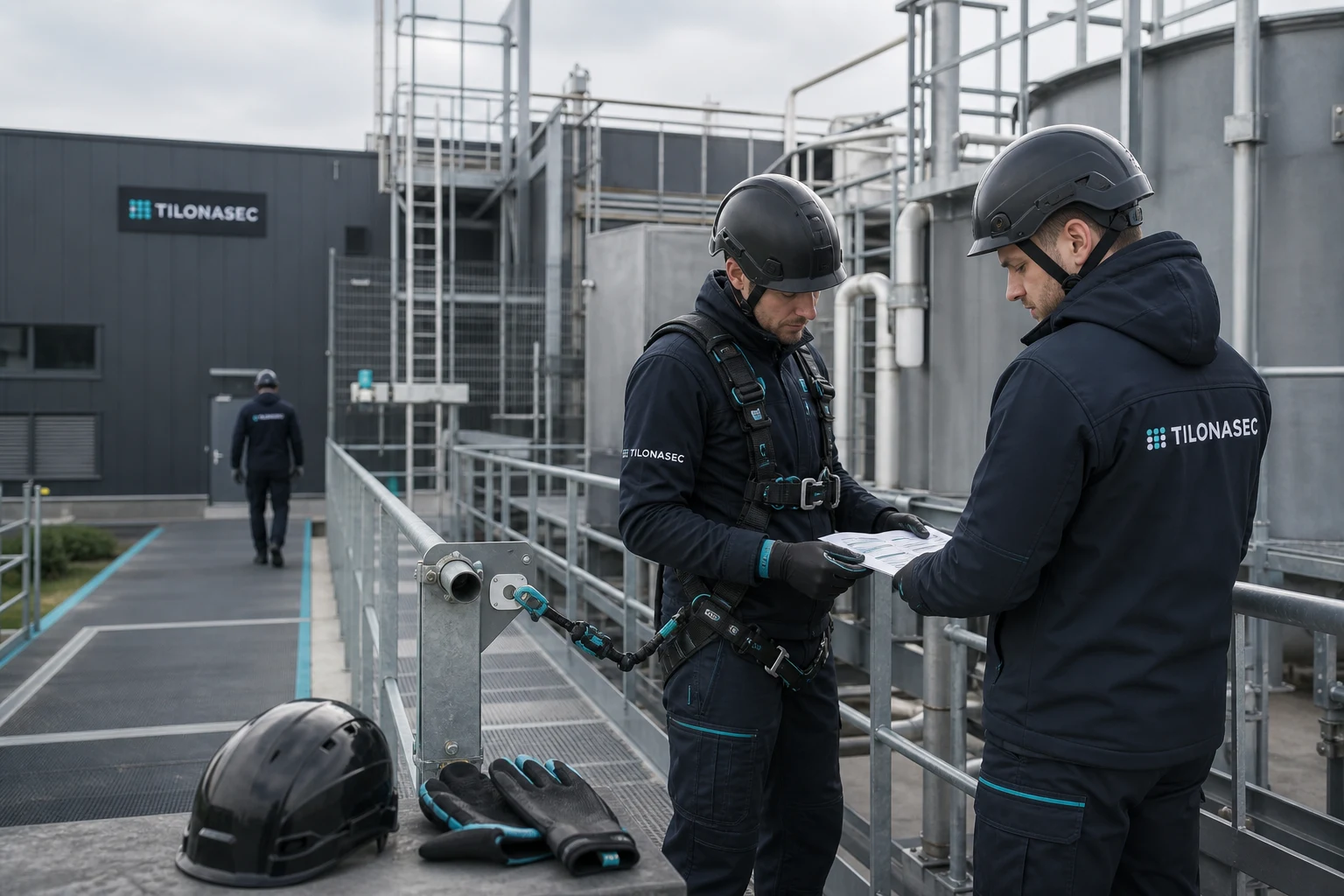
A site photo or short video often explains more than a generic product list. It reveals the floor, working height, machinery and equipment worn together.
- Where does the work happen?
- Indoors, outdoors, in a wet zone, around vehicle traffic or at height.
- How long is it worn?
- For a full shift, a short intervention or only one defined work phase.
- What is worn with it?
- Helmet, eyewear, earmuffs, respirator and harness must remain comfortable and compatible together.
Which starting kit suits each role?
These are procurement starting points, not automatic PPE requirements.
| Role | Procurement starting point |
|---|---|
| Earthmoving plant operator | Visible, weather-resistant clothing and hearing protection matched to noise levels. |
| Pedestrian field worker | Helmet, high-visibility clothing, stable safety footwear and task-specific gloves. |
| Maintenance technician | Mechanical hand, eye and foot protection, with suitable respiratory protection in dusty areas. |
| Loader and banksman | Visibility aligned with vehicle traffic rules and hearing protection that supports communication. |
Expert product selection
Recommended products for your first shortlist
Start with relevant, easy-to-compare products selected for this working environment. Prices, availability and technical data are kept up to date.
Building blocks for the complete solution
Which markings are useful starting filters?
A standard marking can narrow the live product range quickly, but it does not by itself prove that a product is suitable for a particular role.
- EN 397
- Basic and optional requirements for industrial safety helmets. Select for the impact hazard, environment, chinstrap needs and compatibility with other PPE.
- Filter products by this marking
- EN ISO 20345
- Basic and additional requirements for general-purpose safety footwear. Match the protection class and optional markings to the floor, task and exposure.
- Filter products by this marking
- EN ISO 20471
- Requirements for high-visibility clothing in high-risk situations. Select the class from traffic, speed, light conditions and the complete clothing ensemble.
- Filter products by this marking
- EN 149
- FFP1, FFP2 and FFP3 classes for filtering half masks. The class alone is not a selection decision without the contaminant, concentration, fit and use limitations.
- Filter products by this marking
Always compare the results with the documented risk assessment, the required performance level and the product’s current EU declaration of conformity.
Plan in three layers
- 1. Core role kit
- Clothing, footwear and basic PPE used on every shift, with size runs and defined replacement triggers.
- 2. Task module
- Additional protection and checks issued for less frequent but higher-risk operations.
- 3. Reordering plan
- Minimum stock, size distribution, seasonality, inspections and documented approval points.
The detailed knowledge behind the decision
Head protection
Safety helmet selection guide
The essential properties and standards of industrial safety helmets, including fit, compatible accessories, service life and replacement.
Read more →Respiratory protection
Choosing respiratory protection: FFP mask or reusable respirator?
How to select respiratory protection for particles, gases and vapours: FFP1–FFP3, A, B, E, K and P filters, combined cartridges, powered systems and face-seal checks.
Read more →Seasonal planning
Winter PPE procurement: what to order before the season
A buyer’s guide to cold protection under EN 342 and EN 511, high visibility, slip prevention and an early-autumn checklist for complete size availability.
Read more →Procurement checklist
Before requesting a quote
Better input produces more comparable quotations, a more accurate size run and fewer later changes.
- 01 Define visibility requirements for vehicle and pedestrian zones
- 02 Trial helmet, eye and hearing protection together
- 03 Trial field footwear on wet ground
- 04 Link replacement cycles to dust and noise measurements
Frequently asked questions
The questions that come up most often during procurement - the ones the rest of this article does not cover.
What visibility class is needed around heavy machinery?
Where large machines move and sight lines are limited, a higher class (EN ISO 20471 class 3) is justified because of its larger signalling area. Poor visibility conditions - fog, dusk, dust - push the classification upwards.
How do we control rock dust?
Primarily by water-spray dust suppression; protective equipment supplements it. The particle filter class follows from the type of dust and its concentration; with silica-bearing dust the requirement is stricter, and filter changes must be kept to a tighter schedule.
What can be done about operators’ vibration exposure?
Anti-vibration gloves are only a partial answer and do not replace shift organisation on their own. Limiting exposure time and maintaining the machine are more effective - here protective equipment is the last step in the order, not the first.
Professional and legal framework
This page supports decision-making. Specific obligations must always be established from current legislation, the local risk assessment and the documentation for the selected product.
-
Hungarian Act XCIII of 1993 on Occupational Safety
The Hungarian legal framework for risk assessment, prevention and employer responsibility.
-
Regulation (EU) 2016/425 on personal protective equipment
Essential requirements and conformity assessment for PPE placed on the EU market.
-
Hungarian Decree 65/1999 (XII. 22.) EüM on the use of PPE at work
Direct Hungarian requirements for workplace selection, compatibility, use, training and inspection.
-
EU-OSHA OiRA risk-assessment tools
A step-by-step risk-assessment framework, particularly useful for micro and small enterprises.
Important professional note
The product groups and combinations shown are starting points. They do not replace the employer’s documented risk assessment, PPE issue rules, the manufacturer’s instructions or the decision of a competent occupational safety professional. Always verify markings, compatibility and protective performance in the current documentation for the selected product.
Request a quotation assembled by role
Tell us the headcount, roles, current problem and required deadline. We will help plan trial items, size runs, decoration and replenishment.