
Maintenance and repair occupational safety guide
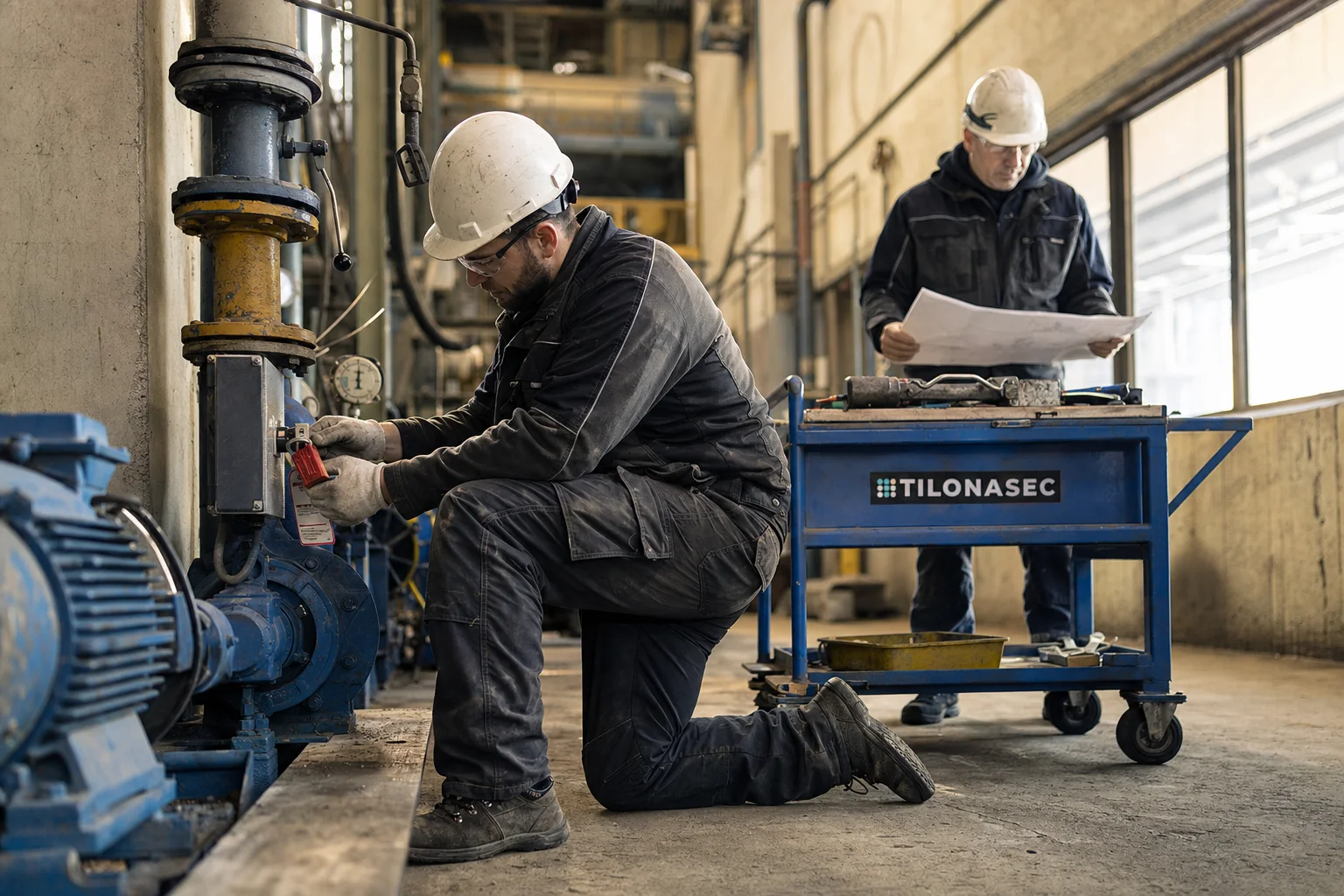
A maintenance engineer’s equipment is not a fixed bag; it is a system of core kit and task-issued modules.
In short
A maintenance technician’s kit is not a fixed bag but a system: a permanent base package carried to every job, plus task-specific additions taken up according to the work. This matters because technicians often arrive at situations nobody described in advance - protection has to be matched to the task on site.
Where a good specification begins
What should be clarified first?
One shift may include mechanical work, electrical tasks, chemical use, noisy plant rooms or ladder work. Supplement the core equipment with task-specific modules, clearly identified storage and a periodic inspection calendar.
Typical risk areas
- Changing tasks that are not always known in advance
- Sharp edges, oil and flying particles
- Noise and dust
- Electrical work or work at height
Show us the work for a more precise quotation
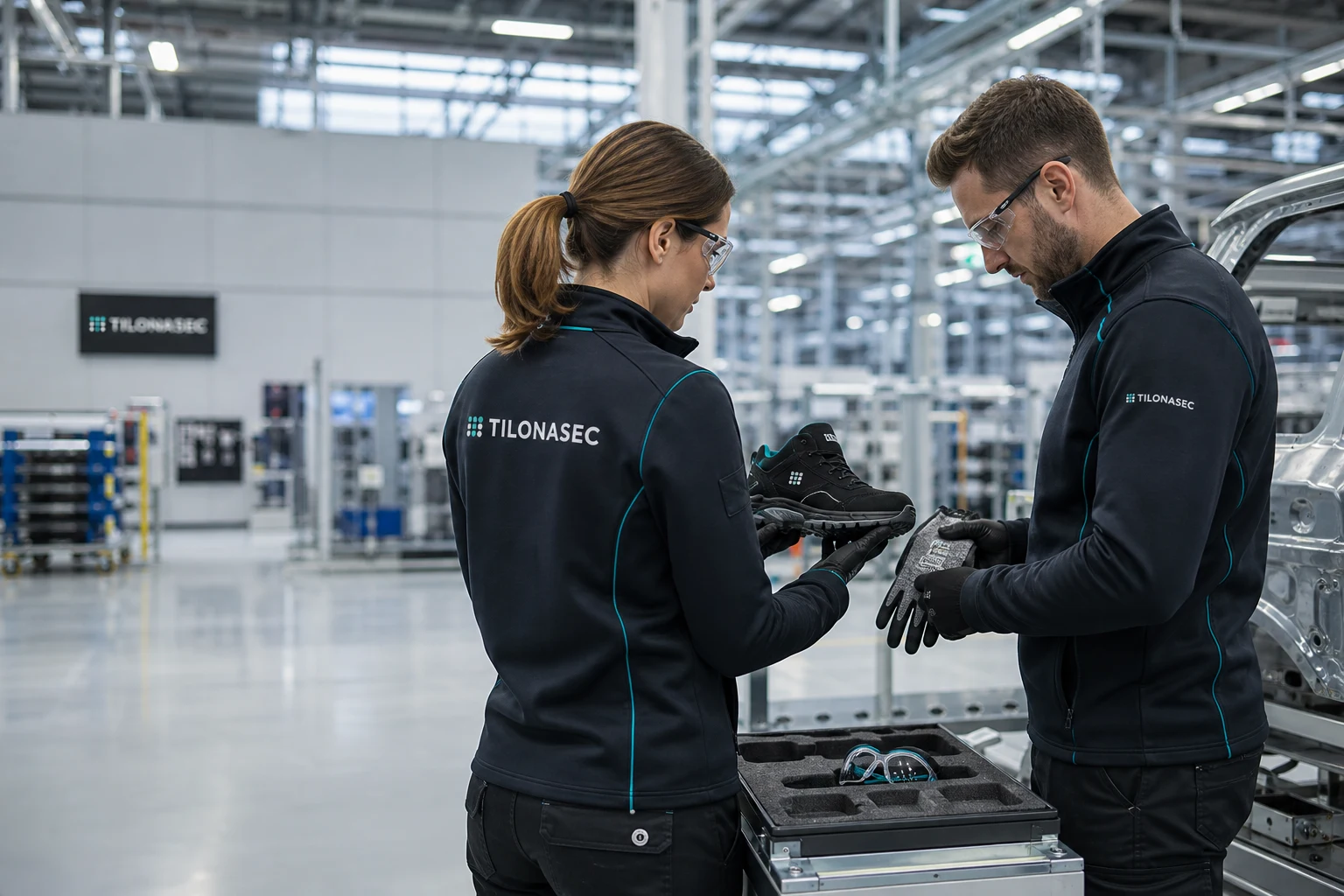
A site photo or short video often explains more than a generic product list. It reveals the floor, working height, machinery and equipment worn together.
- Where does the work happen?
- Indoors, outdoors, in a wet zone, around vehicle traffic or at height.
- How long is it worn?
- For a full shift, a short intervention or only one defined work phase.
- What is worn with it?
- Helmet, eyewear, earmuffs, respirator and harness must remain comfortable and compatible together.
Which starting kit suits each role?
These are procurement starting points, not automatic PPE requirements.
| Role | Procurement starting point |
|---|---|
| General facilities maintenance | Safety footwear, handling gloves, eye protection and durable branded workwear. |
| Mechanical maintenance | Secure grip on oily surfaces, noise and particle protection and task-suitable footwear. |
| Electrical maintenance | Equipment verified specifically for the electrical risk assessment and work method. |
| Roof or work-at-height technician | A fall-protection system and rescue plan using inspected equipment. |
Expert product selection
Recommended products for your first shortlist
Start with relevant, easy-to-compare products selected for this working environment. Prices, availability and technical data are kept up to date.
Building blocks for the complete solution
Which markings are useful starting filters?
A standard marking can narrow the live product range quickly, but it does not by itself prove that a product is suitable for a particular role.
- EN 388
- Performance tests for protective gloves against mechanical risks. Interpret each level against the actual abrasion, cut, tear and puncture hazards.
- Filter products by this marking
- EN ISO 16321-1
- General requirements for occupational eye and face protection. EN 166 remains common in existing stock; for new procurement, verify the applied standard edition and hazard-specific markings.
- Filter products by this marking
- EN ISO 20345
- Basic and additional requirements for general-purpose safety footwear. Match the protection class and optional markings to the floor, task and exposure.
- Filter products by this marking
- EN 361
- Requirements for full-body harnesses used to arrest a fall. A harness is only one system component; suitable connection, energy management, anchorage, clearance and rescue planning are also required.
- Filter products by this marking
Always compare the results with the documented risk assessment, the required performance level and the product’s current EU declaration of conformity.
Plan in three layers
- 1. Core role kit
- Clothing, footwear and basic PPE used on every shift, with size runs and defined replacement triggers.
- 2. Task module
- Additional protection and checks issued for less frequent but higher-risk operations.
- 3. Reordering plan
- Minimum stock, size distribution, seasonality, inspections and documented approval points.
The detailed knowledge behind the decision
Procurement
Buying quality PPE: a safety decision that pays back
Why PPE should be compared by total cost rather than unit price, with standards-led specifications, wearer acceptance and a ten-point buyer checklist.
Read more →Services
Periodic inspection of fall-protection equipment: a practical guide
How harnesses, lanyards and fall arresters are inspected under EN 365, when equipment must be withdrawn, and how to organise a mixed-fleet inspection efficiently.
Read more →Procurement
Planning an annual PPE budget: allowances, replacement cycles and call-off supply
Plan annual PPE demand using workforce numbers, issue allowances, size distribution, replacement cycles and a seasonal call-off schedule.
Read more →Procurement checklist
Before requesting a quote
Better input produces more comparable quotations, a more accurate size run and fewer later changes.
- 01 List the core kit and task-specific modules
- 02 Set minimum consumable stock and reorder points
- 03 Maintain one calendar for periodic inspections
- 04 Conduct wear trials during the most common tasks
Frequently asked questions
The questions that come up most often during procurement - the ones the rest of this article does not cover.
What should the base package contain?
Safety footwear, mechanical gloves, safety glasses and workwear - these are needed on every job. Hearing protection, respiratory protection and fall arrest are task-specific, so it is better to issue them to the site than to carry them daily.
What protective equipment is required for electrical work?
With the installation de-energised, mechanical protection is enough; near live parts, insulating gloves, arc-rated clothing and face protection are justified. The level follows from the expected arc energy, which an electrical engineer must determine - it is not a procurement decision.
How do we track who has what?
With individual issue records that capture the size and the date of issue. Without them replenishment is guesswork, and items with expiring inspections - harnesses, helmets - stay in use unnoticed.
Professional and legal framework
This page supports decision-making. Specific obligations must always be established from current legislation, the local risk assessment and the documentation for the selected product.
-
Hungarian Act XCIII of 1993 on Occupational Safety
The Hungarian legal framework for risk assessment, prevention and employer responsibility.
-
Regulation (EU) 2016/425 on personal protective equipment
Essential requirements and conformity assessment for PPE placed on the EU market.
-
Hungarian Decree 65/1999 (XII. 22.) EüM on the use of PPE at work
Direct Hungarian requirements for workplace selection, compatibility, use, training and inspection.
-
EU-OSHA OiRA risk-assessment tools
A step-by-step risk-assessment framework, particularly useful for micro and small enterprises.
-
Hungarian Decree 3/2002 (II. 8.) SZCSM-EüM on minimum workplace safety requirements
The comprehensive Hungarian framework for the design, operation and risk control of fixed workplaces.
Important professional note
The product groups and combinations shown are starting points. They do not replace the employer’s documented risk assessment, PPE issue rules, the manufacturer’s instructions or the decision of a competent occupational safety professional. Always verify markings, compatibility and protective performance in the current documentation for the selected product.
Request a quotation assembled by role
Tell us the headcount, roles, current problem and required deadline. We will help plan trial items, size runs, decoration and replenishment.