
Machinery and engineering occupational safety guide
Precision assembly and heavy machining cannot be managed with the same PPE list.
In short
In machinery manufacturing, precision assembly and heavy machining cannot be handled from one list. Assemblers need thin, tactile gloves that do not compromise grip; for machinists, chips, oil and noise are decisive. Safety footwear and eye protection are the common base.
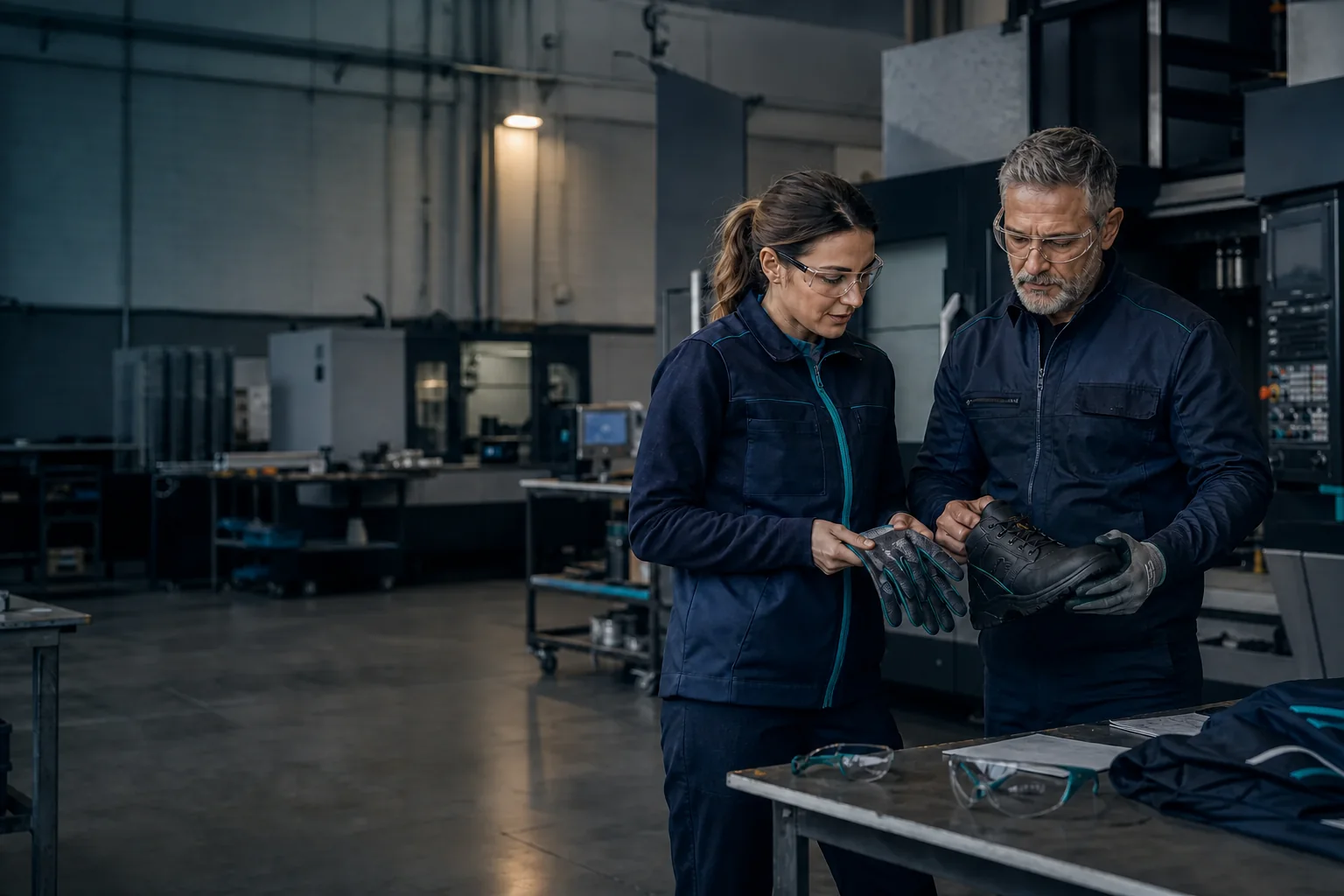
Where a good specification begins
What should be clarified first?
Machining, assembly, surface treatment and maintenance require different levels of dexterity and protection. Alongside role-based kits, key considerations include grip on oily components, the fit of eye and face protection and full-shift footwear comfort.
Typical risk areas
- Swarf and flying particles
- Oil, metalworking fluid and coatings
- Noise and vibration
- Sharp components and hot surfaces
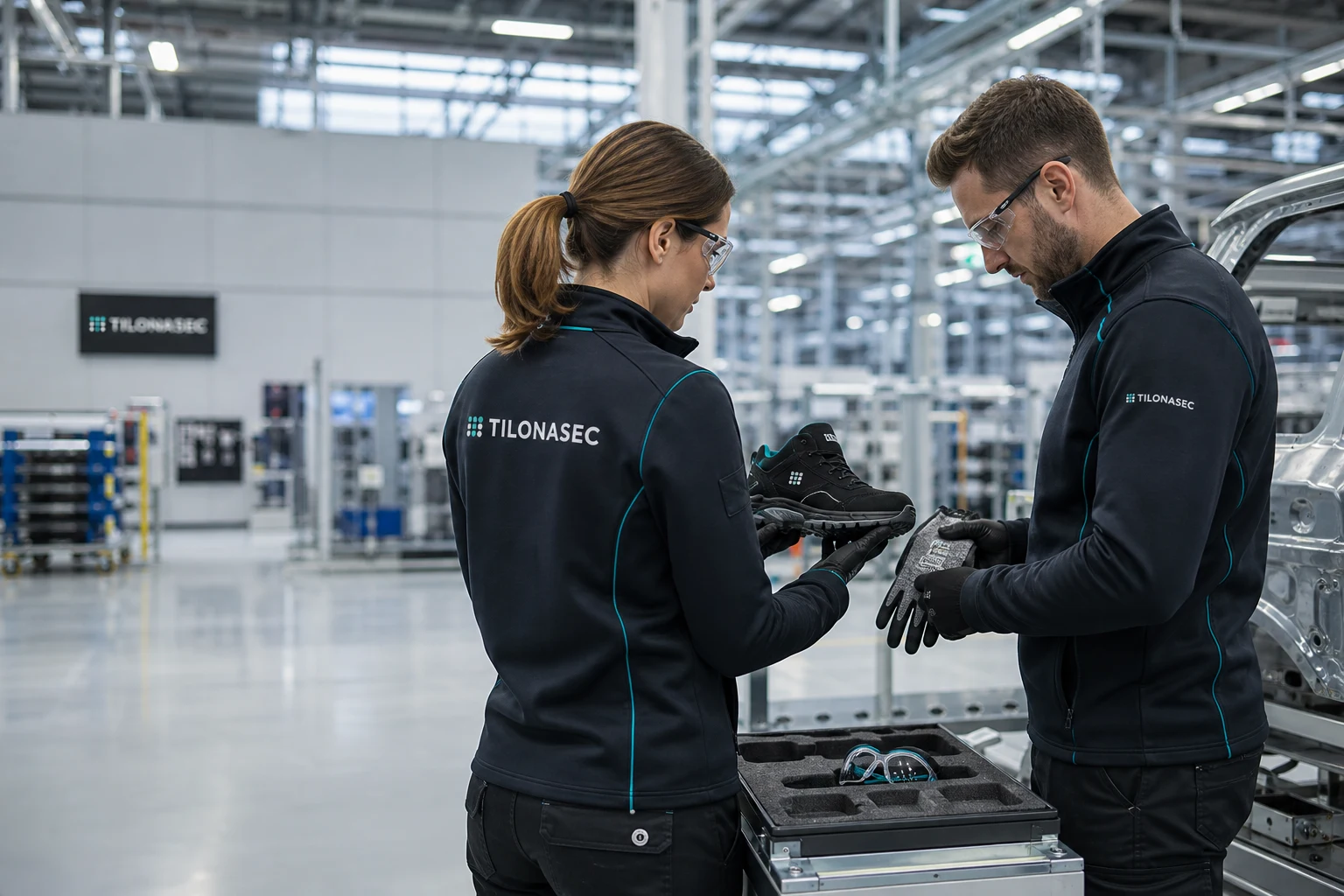
Show us the work for a more precise quotation
A site photo or short video often explains more than a generic product list. It reveals the floor, working height, machinery and equipment worn together.
- Where does the work happen?
- Indoors, outdoors, in a wet zone, around vehicle traffic or at height.
- How long is it worn?
- For a full shift, a short intervention or only one defined work phase.
- What is worn with it?
- Helmet, eyewear, earmuffs, respirator and harness must remain comfortable and compatible together.
Which starting kit suits each role?
These are procurement starting points, not automatic PPE requirements.
| Role | Procurement starting point |
|---|---|
| Precision assembly operator | Tactile gloves, lightweight workwear and safety footwear. |
| Machine-tool operator | Eye and hearing protection; hand protection only for material handling when machinery is stopped and isolated. Prevent entanglement around moving rotating parts. |
| Welder and fabricator | Process-specific eye, face, hand and clothing protection. |
| Painter and surface-treatment operator | Chemical, eye, body and respiratory protection based on the substance and exposure. |
Expert product selection
Recommended products for your first shortlist
Start with relevant, easy-to-compare products selected for this working environment. Prices, availability and technical data are kept up to date.
Building blocks for the complete solution
Which markings are useful starting filters?
A standard marking can narrow the live product range quickly, but it does not by itself prove that a product is suitable for a particular role.
- EN ISO 16321-1
- General requirements for occupational eye and face protection. EN 166 remains common in existing stock; for new procurement, verify the applied standard edition and hazard-specific markings.
- Filter products by this marking
- EN 388
- Performance tests for protective gloves against mechanical risks. Interpret each level against the actual abrasion, cut, tear and puncture hazards.
- Filter products by this marking
- EN 352-1
- Safety and performance requirements for earmuffs. Match attenuation to measured noise, frequency distribution, wearing time and other head-mounted PPE.
- Filter products by this marking
- EN ISO 20345
- Basic and additional requirements for general-purpose safety footwear. Match the protection class and optional markings to the floor, task and exposure.
- Filter products by this marking
Always compare the results with the documented risk assessment, the required performance level and the product’s current EU declaration of conformity.
Plan in three layers
- 1. Core role kit
- Clothing, footwear and basic PPE used on every shift, with size runs and defined replacement triggers.
- 2. Task module
- Additional protection and checks issued for less frequent but higher-risk operations.
- 3. Reordering plan
- Minimum stock, size distribution, seasonality, inspections and documented approval points.
The detailed knowledge behind the decision
Hand protection
Protective glove selection guide
Protective glove standards and markings explained: mechanical and chemical risks, cut resistance, materials, coatings, grip and sizing.
Read more →Implementation
Wear trials: introduce new PPE with employee confidence
A five-step wear trial, from sample selection and a representative test group to feedback, documented decisions and successful implementation.
Read more →Procurement
Buying quality PPE: a safety decision that pays back
Why PPE should be compared by total cost rather than unit price, with standards-led specifications, wearer acceptance and a ten-point buyer checklist.
Read more →Procurement checklist
Before requesting a quote
Better input produces more comparable quotations, a more accurate size run and fewer later changes.
- 01 Assess risk and dexterity needs for each operation
- 02 Run an oily-grip trial
- 03 Select hearing protection against measured noise
- 04 Set minimum stock and replacement points for consumables
Frequently asked questions
The questions that come up most often during procurement - the ones the rest of this article does not cover.
Can gloves be worn at a machining centre?
Near rotating tools gloves create an entanglement hazard, so they are usually prohibited there. The risk assessment must say so explicitly, because workers otherwise feel hand protection is the more important thing - and it is exactly what would increase the danger.
Which gloves resist cutting fluid?
Oily emulsions call for nitrile-coated or fully dipped gloves; textile gloves absorb the fluid and hold it against the skin. For prolonged contact the material’s permeation time is the reference, and the manufacturer’s data sheet states it.
How do we choose gloves for precision assembly?
The thinner, more tactile glove is the right one, even at a lower mechanical class. Over-specified protection that makes work impossible ends up off the hand - and protection only counts for as long as it is worn.
Professional and legal framework
This page supports decision-making. Specific obligations must always be established from current legislation, the local risk assessment and the documentation for the selected product.
-
Hungarian Act XCIII of 1993 on Occupational Safety
The Hungarian legal framework for risk assessment, prevention and employer responsibility.
-
Regulation (EU) 2016/425 on personal protective equipment
Essential requirements and conformity assessment for PPE placed on the EU market.
-
Hungarian Decree 65/1999 (XII. 22.) EüM on the use of PPE at work
Direct Hungarian requirements for workplace selection, compatibility, use, training and inspection.
-
EU-OSHA OiRA risk-assessment tools
A step-by-step risk-assessment framework, particularly useful for micro and small enterprises.
-
Hungarian Decree 3/2002 (II. 8.) SZCSM-EüM on minimum workplace safety requirements
The comprehensive Hungarian framework for the design, operation and risk control of fixed workplaces.
Important professional note
The product groups and combinations shown are starting points. They do not replace the employer’s documented risk assessment, PPE issue rules, the manufacturer’s instructions or the decision of a competent occupational safety professional. Always verify markings, compatibility and protective performance in the current documentation for the selected product.
Request a quotation assembled by role
Tell us the headcount, roles, current problem and required deadline. We will help plan trial items, size runs, decoration and replenishment.