
Wear trials: introduce new PPE with employee confidence
A five-step wear trial, from sample selection and a representative test group to feedback, documented decisions and successful implementation.
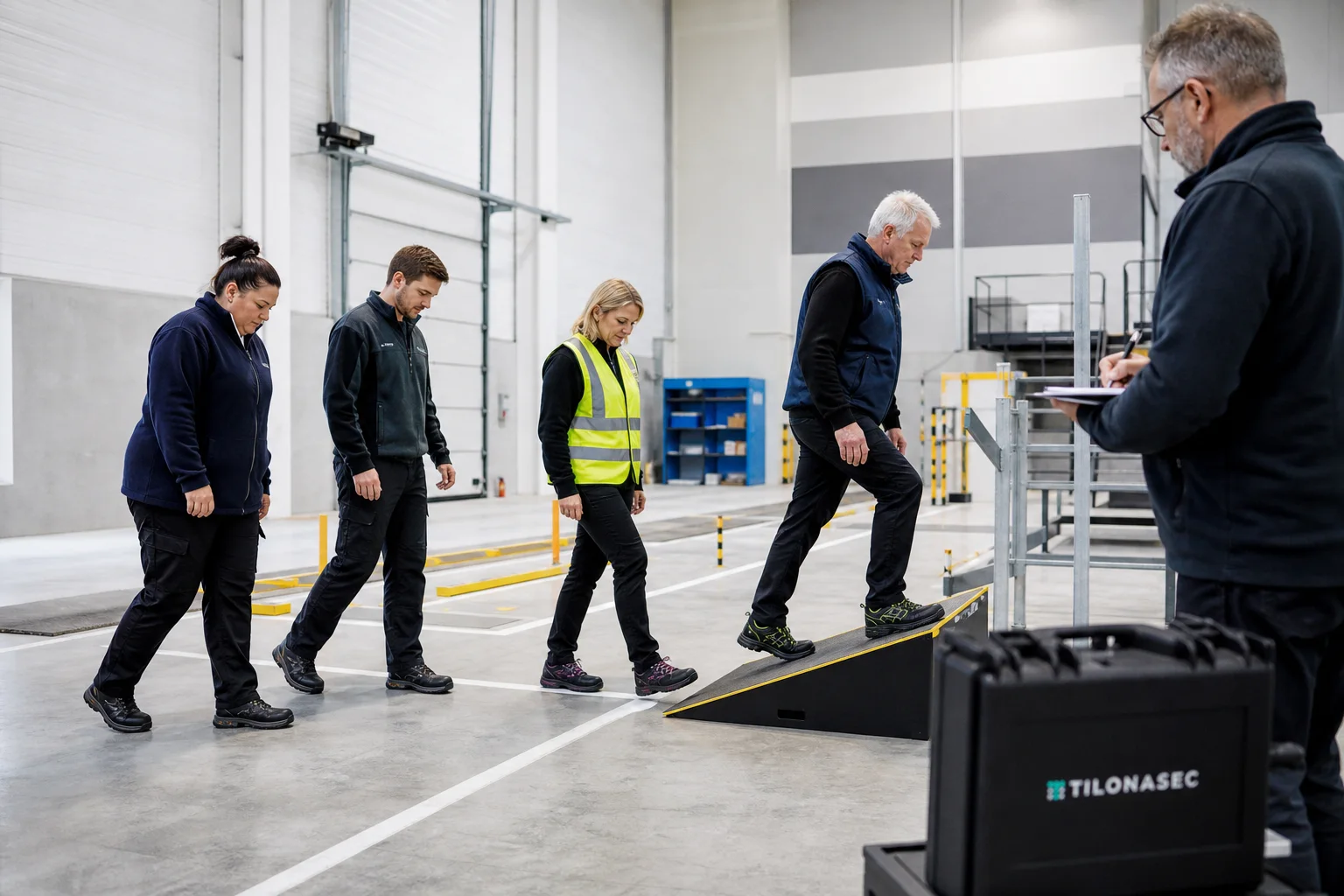
Even the best specification will fail if employees are unwilling to wear the new equipment. A wearer trial is the least expensive way to discover that before rollout rather than afterwards. One or two weeks, a few samples and a simple evaluation form are usually enough to prevent the next order ending in unused stock and frustrated teams. This guide explains how to run a trial that produces a defensible purchasing decision.
The essentials in 30 seconds
- Protection depends on use: PPE that has been removed provides no protection, whatever its performance rating.
- A wearer trial is consistent with ISO 45001, which treats worker consultation and participation as core principles.
- The five stages are: shortlist → samples → trial group → 1–2 weeks of real work → documented decision.
- The most common mistake is to ask one person to try one item for half a day and record none of the feedback.
- A capable supplier provides the samples; we actively recommend and support wearer trials.
🎯 Why is a trial worthwhile for procurement?
There are three reasons. First, two products that look equivalent on paper can feel very different in use: fit, ventilation and stiffness only become clear when the item is worn. Second, employee acceptance should not be treated as a communications exercise after the decision. A trial can prevent conflict before it develops; people who helped make the choice are more likely to explain its benefits to colleagues. Third, the findings provide documented evidence for commercial negotiations and internal approval.
🧪 The five stages of a wearer trial
- Use the specification to shortlist two or three candidates. A trial does not replace technical selection. EN requirements should first screen out unsuitable options; our PPE tender guide can help. The trial then distinguishes between compliant candidates.
- Request samples across the required size range. An item tested in the wrong size produces a misleading result. Sizing is half of the trial.
- Build a representative trial group: include different shifts, body types, women and men, experienced staff and new starters. Include the most vocal critic; if the product convinces that person, their feedback will carry weight.
- Run the trial for 1–2 weeks in real work, using a simple evaluation form. This is not a half-day showroom exercise. It should cover full shifts and real tasks. Five or six questions should take no more than five minutes to complete.
- Record the decision. File the scores and written comments with the procurement decision as evidence that wearability and acceptance were considered.
📝 What should the evaluation form ask?
- Fit and sizing: was the first size correct, or was an exchange needed?
- Comfort at the end of the shift: not during the first hour; the eighth hour is what matters.
- Task performance: grip, movement, vision and hearing during the actual work.
- Compatibility: does it interfere with a helmet, eyewear, hearing protection or other PPE?
- Condition after the trial: abrasion, seams and coatings provide an early indication of service life.
- Would you choose to use this item again? This question often summarises the rest.
⚠️ The five most common mistakes
- Only one person takes part, often a supervisor whose daily work differs from that of the production team.
- A half-day “trial”; discomfort may only appear after four hours, while heat stress may only emerge in summer.
- Nothing is recorded; six months later, nobody remembers why the chosen product won.
- The rejected sample remains in stores and is issued during a shortage, undermining standardisation.
- The price list overrides the result; at that point the trial was theatre, not part of the decision.
If this is difficult to fit around normal operations, we can organise the trial with you. We provide samples and a size set, supply an evaluation template and make a recommendation based on the results. It starts with one request for quotation.
💚 Communicating the rollout: the final essential step
“This is what you will receive from now on” is the worst possible opening when introducing new PPE. A better explanation covers why the change was made, who tested the products and what they found. If employees can see that colleagues' feedback shaped the decision, the equipment becomes a shared choice rather than an instruction. This reflects the same duty-of-care principle discussed in our guide to quality PPE procurement.
❓ Frequently asked questions
How long should a wearer trial last?
For consumables such as gloves, one to two weeks is usually enough to understand consumption and comfort. For footwear and clothing, two weeks is the minimum because the wearing-in period can distort the result. Full-shift use in real work matters more than the number of calendar days.
How many people should take part?
For a small team, three to five people may be sufficient. At a larger site, two or three people per shift is a useful starting point. Representation across body type, task and shift matters more than the absolute number. One person's view is an anecdote, not a trial.
What if opinions are divided?
Identify the reason. If it relates to size or task, two product types may genuinely be required. If it is preference, use the overall score and expected service life, but always explain the final decision to participants.
Who should provide the samples?
The supplier. This is one sign of a serious partner. We provide samples and full size sets because a tested product is a better purchase for the customer, the supplier and, above all, the person who will use it.
Final consideration
A wearer trial may be the best-value two weeks in a PPE procurement project. It filters out products that are sound on paper but poor in practice, builds employee acceptance and supplies documented evidence for the decision. Without it, even an expensive product is a gamble; with it, selection becomes a repeatable process.
Choose the equipment group due for replacement and request a quotation that includes samples. We will help organise the trial and recommend the best option on the evidence. Browse the full range in our catalogue; our annual PPE budget guide helps plan replenishment.
Professional reference point: ISO 45001 treats worker consultation and participation as core requirements of an occupational health and safety management system. This article provides general guidance and does not replace a workplace risk assessment.