
Buying quality PPE: a safety decision that pays back
Why PPE should be compared by total cost rather than unit price, with standards-led specifications, wearer acceptance and a ten-point buyer checklist.
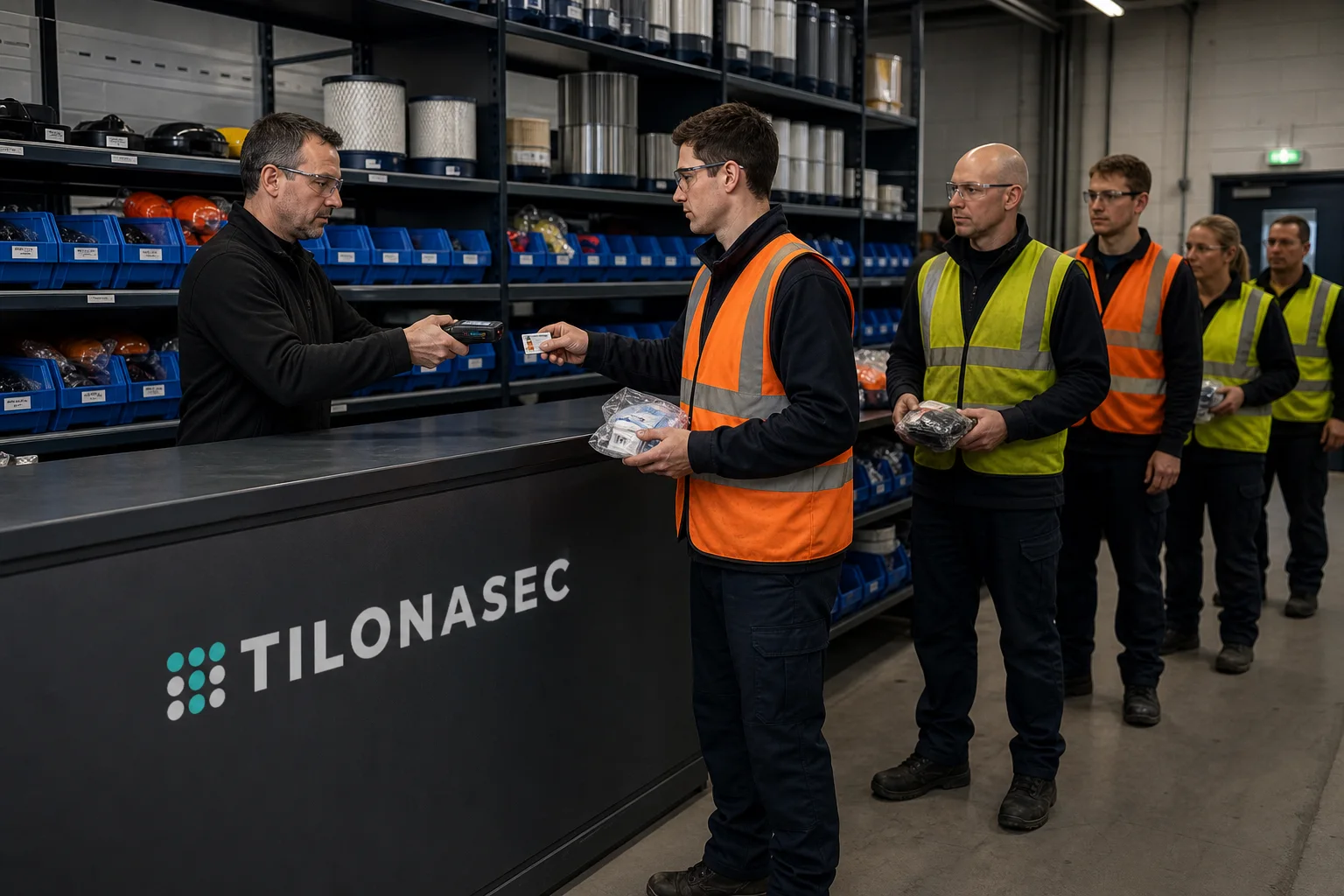
One of the most important workplace safety decisions is made at the buyer’s desk: whether people receive PPE they can wear correctly for an entire shift, or equipment they remove after ten uncomfortable minutes. PPE that is not worn cannot protect, whatever its price. This guide shows how procurement becomes a safety, retention and total-cost decision rather than a simple expense line.
The essentials in thirty seconds
- Under Hungarian workplace safety law, required PPE must be provided by the employer free of charge. The procurement question is therefore what to provide, not whether to provide it.
- Unit price is incomplete: compare total cost, including useful life, replacement rate, administration, absence and risk.
- A sound specification uses relevant EN performance requirements, not a brand name or the lowest bid alone.
- Comfortable, well-fitted equipment is more likely to be worn consistently.
- A ten-point buyer checklist at the end can be used before a tender or repeat order.
🛒 Why procurement shapes workplace protection
Hungary’s Act XCIII of 1993 requires the employer to provide PPE at its own cost and arrange its usability, maintenance, cleaning and replacement. Whether that obligation works in practice depends heavily on the procurement decision.
In an ISO 45001-aligned system, buying PPE is part of the safety process: requirements flow from the risk assessment, users are consulted and feedback informs the next decision. EU Regulation 2016/425 governs the product side: PPE placed on the market must carry the appropriate CE marking and conformity information. Those are entry conditions; suitability for the actual task still has to be established.
💸 The real cost of cheap PPE
| Cost factor | Typical risk with a price-only choice | What a well-specified product can improve |
|---|---|---|
| Life and replacement cycle | Rapid wear and frequent reordering | Longer, more predictable service |
| Wearing compliance | Discomfort encourages removal or workarounds | Better fit supports all-shift wear |
| Incidents and lost time | Unsuitable or unworn protection increases exposure | Suitable equipment supports effective controls |
| Skin and comfort issues | Heat, chafing or sensitivity complaints | Better materials and ergonomic design |
| Administration | More orders, exchanges and complaints | Standardised, planned replenishment |
If a glove costs twice as much but lasts three times as long and is actually worn, it can be both cheaper per month and safer. The useful question is not only “what does one pair cost?” but “what does one month of suitable, worn protection cost?”
📋 A good specification uses performance requirements
PPE quality is not merely a matter of taste. Start with the workplace hazard and express the required, verifiable performance:
- Protective gloves: EN 388 performance for mechanical hazards and the suitable A–F cut level where relevant; EN ISO 374 and chemical-specific evidence for chemical exposure. See our glove guide.
- Footwear: the EN ISO 20345 protection class appropriate to the environment. Use our footwear selection guide and standard update.
- Head protection: for example, EN 397 industrial helmets or a different standard where the work and risk assessment require it. See the helmet guide.
- Respiratory protection: an FFP class or filter type derived from contaminant and exposure, never simply “a mask”.
Request the EU declaration of conformity and user information, and check the standard edition where it affects the specification. “Equivalent” is only meaningful when the measurable requirements are genuinely equivalent.
💚 Protection that people accept
Employees experience a procurement decision for hours every day. Equipment that pinches, tears or traps excessive heat communicates poor care; suitable, well-fitted equipment communicates that their work matters. This can support retention, reduce complaints and strengthen the employer brand.
There is also a direct safety effect: comfortable equipment is more likely to be worn. A standard code only delivers value when the item remains correctly fitted throughout the task.
Send us the roles, hazards and workforce numbers through a quote request. We can propose suitable products, samples and a practical size range.
✅ Ten questions before the next order
- Does the requirement begin with the current risk assessment, not last year’s order?
- Does each line state the necessary standard and performance level?
- Have you obtained the EU declaration of conformity and checked the CE marking?
- Has there been a wear trial with representative users?
- Is the full required size range available?
- Have you compared total cost, including life and replacement rate?
- Is the issue and replacement process clear?
- Can the supplier provide competent selection support?
- Have you standardised sensible items to reduce complexity and stock risk?
- Is there a worker feedback route before the next cycle?
❓ Frequently asked questions
Who pays for required PPE?
At Hungarian workplaces, required PPE is provided by the employer at no cost to the employee, including the arrangements needed for cleaning, maintenance and replacement. Employers elsewhere must follow their national law.
Is CE marking enough?
No. It is an essential market-conformity indication, not proof that the product suits a particular hazard. A CE-marked S1 shoe may be fully conforming but still unsuitable where the assessment requires S3.
How should two quotations be compared?
First align the standard and performance requirements, then compare service life, replacement cycle, availability, wearer-trial results, documentation and service support as well as unit price.
When should PPE be replaced?
Apply the stricter of the manufacturer’s life limit and the condition criteria. Damage, wear, depleted coatings or an expired life limit require action even if the item still looks usable at a glance.
Final thought
Quality PPE can be one of the best-value procurement decisions: it protects because people wear it, lasts because it suits the task and supports retention because it demonstrates care. Total cost gives a truer answer than unit price.
Use the checklist before your next order, request a risk-led quotation, or browse the complete catalogue.
Professional references: Hungary’s Act XCIII of 1993 on Occupational Safety, EU Regulation 2016/425 and ISO 45001. This article is general guidance and does not replace the workplace risk assessment or legal advice for a particular jurisdiction.