
Planning an annual PPE budget: allowances, replacement cycles and call-off supply
Plan annual PPE demand using workforce numbers, issue allowances, size distribution, replacement cycles and a seasonal call-off schedule.
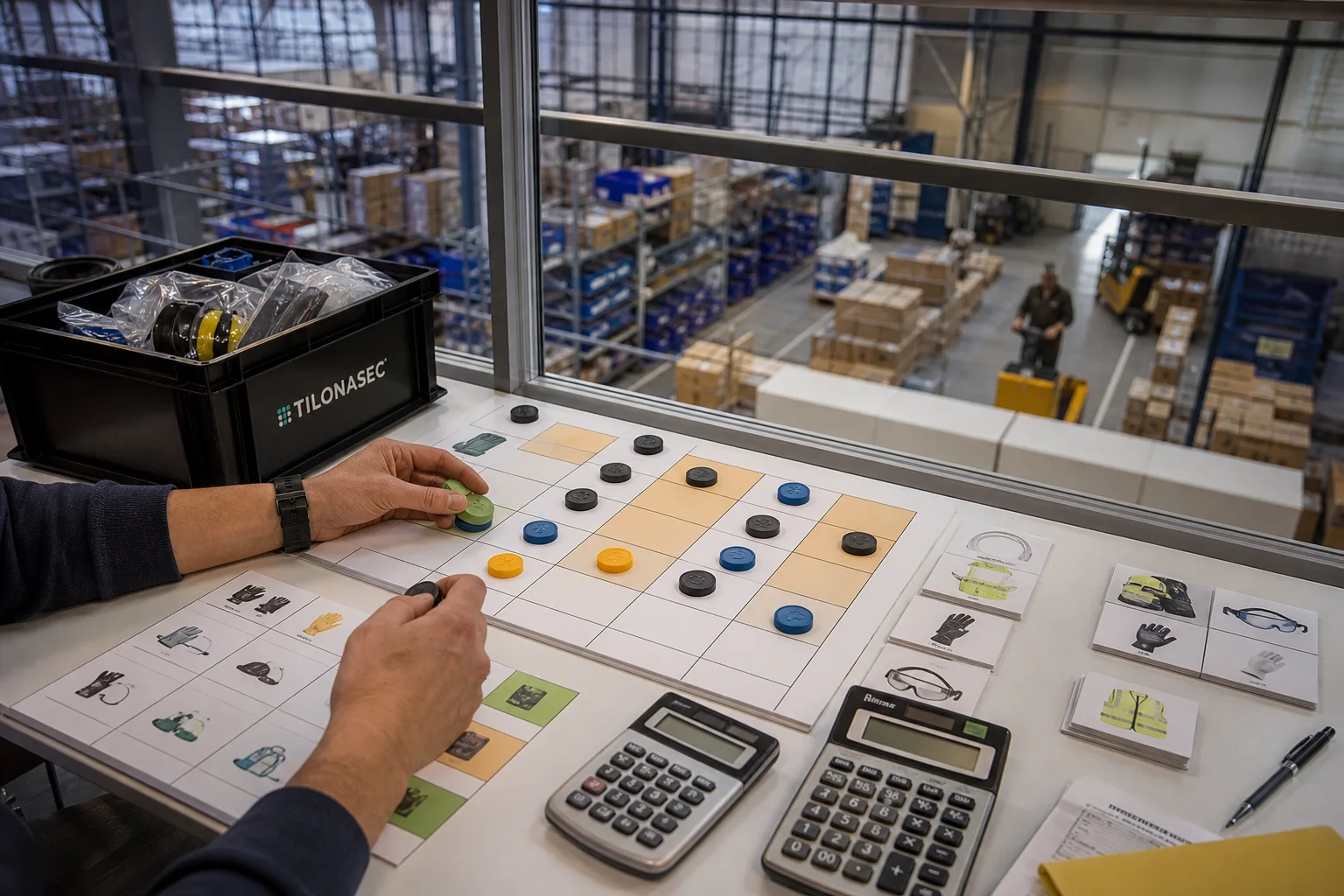
Ad-hoc ordering is usually the most expensive purchasing model: every requirement is urgent, often charged at list price, and the shortage becomes visible when an employee needs the gloves at six in the morning. An annual PPE plan replaces that uncertainty with budget visibility, dependable replenishment and consistent quality. This guide shows how to calculate annual demand and turn it into a workable framework agreement.
The essentials in 30 seconds
- The basic formula is: headcount × issue allowance × replacement frequency, plus provision for new starters and seasonal demand.
- The employer should document its internal PPE issue policy. Under Hungarian occupational safety law this is also the basis for annual planning.
- A framework agreement with call-off orders provides predictable pricing, stock security and less administration.
- Seasonal items should be ordered weeks before the season begins, not on the first freezing morning.
- A sound plan replaces expedited-order premiums, shortages and disruption.
📊 What makes up annual demand?
Start with the PPE issue policy, which defines the equipment allocated to each role. If it is current, most of the plan already has a reliable foundation:
- Headcount by role, the base unit of the calculation.
- Replacement frequency by item: monthly consumption for gloves, earplugs and filtering facepieces; service-life and condition-based replacement for footwear, clothing and helmets.
- Size distribution: use previous issue data rather than stocking only the most common size.
- Staff turnover and new starters: each new employee needs a complete set from the first day, so retain a controlled starting stock.
- Seasonality: insulated gloves and jackets for winter, more breathable footwear and clothing for warmer periods.
🧮 A simple worked example
Illustration for a 40-person facility; actual figures should come from consumption data and the risk assessment:
| Item | Allowance | Annual quantity | Points to consider |
|---|---|---|---|
| Assembly gloves | 2 pairs/person/month | 960 pairs | A more durable glove may reduce replacement frequency; measure consumption |
| Safety footwear (S1P/S3) | 1 pair/person/year plus condition-based replacement | 44–48 pairs | Full size range and introduction period for a new model |
| Safety spectacles | 1/person/year plus replacements | 50 | Scratched lenses require replacement |
| Individually packed earplugs | 1 pair/person/shift | approximately 10,000 pairs | Dispenser packaging can reduce waste and improve hygiene |
| Winter gloves and hat | 1 set/person/season | 40 sets | Order in early autumn, not at the first frost |
Once allowances and previous consumption are known, annual demand is a short calculation rather than an estimate. If reliable data are unavailable, the first framework year can establish the baseline.
📦 Why use a framework agreement?
- Predictable pricing: annual-volume pricing is normally better than repeated small orders and makes budgeting easier.
- Call-off ordering: the annual quantity need not occupy your storeroom at once.
- Continuity of supply: the supplier plans for the agreed quantity. Our Szeged and Budapest stocks help reduce routine lead times.
- Consistent quality: the model does not change with every order.
- Less administration: one agreement, scheduled call-offs and one contact.
Send the headcount, roles and, where available, last year's consumption in a request for quotation. We will calculate demand and prepare a product proposal using current catalogue data.
📅 Seasonal calendar for procurement
- Early autumn: order insulated gloves, jackets and hats before temperatures fall.
- Late winter: review winter consumption and plan spring and summer items.
- Spring: plan breathable footwear, lighter clothing and UV- or heat-related provisions.
- Before year-end: review full-year consumption, update allowances and renew the framework where appropriate.
💚 A reliable plan also improves employee experience
Predictable replenishment means the correct size is available, damaged gloves do not have to last “one more week”, and replacement quality is consistent. It carries the same duty-of-care message described in our guide to quality PPE procurement, but here the system delivers it.
❓ Frequently asked questions
How often should an employee receive new PPE?
Whenever required protection is no longer assured. An internal policy provides a planned interval, but damaged or worn equipment must be replaced before that interval ends. Include a condition-based replacement reserve.
Is it worthwhile ordering in larger quantities?
Volume pricing can be worthwhile; unnecessary on-site stock is not. A call-off framework prices against annual volume while releasing goods in scheduled quantities.
How should I plan for new starters?
Keep starter sets in common sizes and allocate a separate quantity in the plan. At sites with higher turnover this can be substantial and should be forecast.
How can we change product during the framework period?
Use a wearer trial and a controlled transition. A representative group should test the proposed model before it enters the framework. Our wearer-trial guide explains the process.
Final consideration
An annual PPE plan is procurement's best tool for making protection predictable: planned spend, dependable supply and consistent quality, without emergency premiums or first-shift shortages.
Send your headcount and roles in a request for quotation and we can prepare an annual plan with product recommendations. Alternatively, browse our standards-searchable catalogue.
Professional reference points: Hungary's Act XCIII of 1993 on Occupational Safety and Hungarian requirements for an employer's internal PPE issue rules. Figures are illustrative; the actual plan must reflect consumption data, risk assessment and the law applicable at the place of use.